
‘It will endure:’ RI sex workers weigh in on bill to decriminalize prostitution
Katie Mulvaney
Providence Journal
Key Points
* Rhode Island lawmakers are considering bills to decriminalize consensual sex work.
* Proponents argue decriminalization improves public health and safety for sex workers.
* Indoor prostitution was legal in the state from 1980 to 2009, a period linked to fewer STIs.
For decades, indoor prostitution was legal in Rhode Island.
During that period, from 1980 to 2009, the state saw a dip in sexually transmitted infections and sexual assaults. But in 2009, state lawmakers closed the legal loophole, criminalizing prostitution once again.
Then, in 2023, a diverse 13-member legislative commission composed of public defenders, law enforcement, civil liberties advocates and sex workers with lived experience, among others, recommended once again decriminalizing consensual sex work, and the General Assembly is now weighing bills to do just that.
“I’d rather have my neighbors safe and alive,” said Henri Binx, a second-generation sex worker who was on the commission. “This is the oldest industry. We’re talking older than democracy. It will endure.”
Why push to decriminalize sex work?
“From a public health perspective, decriminalization is meant to increase safety,” said Dr. Phil Chan, chief medical officer at Open Door Health, Rhode Island Public Health Institute. Criminalization “makes people fearful, and it drives everyone underground.”
Chan believes that legalizing consensual sex work would allow law enforcement and the state more broadly to zero in on human trafficking and clear the way for more victims to come forward.

State Sen. Tiara Mack, D-Providence, sponsors decriminalization legislation each year.
“Many people make a living off sex work, and this work is often more dangerous and subject to exploitation when it is criminalized. Workers report less crimes and johns have more power over victims. ‘Decrim’ bills aim to create greater safety but also destigmatize these individuals and the way they earn a living,” Mack said in an email.
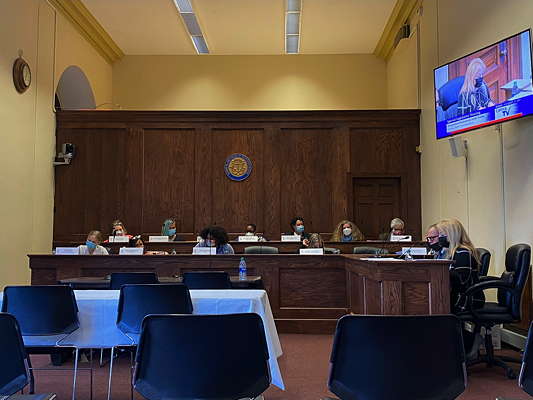
The House Committee on the Judiciary took the measure up on April 9, with Rep. Edith Ajello, D-Providence, as lead sponsor. Ajello led the committee that studied commercial sex work in Rhode Island and emphasizes that in no way does she want to legalize middle men involved in sex trafficking.
“It’s been called the oldest profession, and it seems like if there is a willing seller and a willing buyer between adults, the government has no business getting involved,” Ajello said.
Ajello was particularly persuaded by Chan’s evidence that sexually transmitted infections decreased during the period in which indoor sex work was legal.
“I think there is an argument that public health and privacy would benefit from decriminalization,” she said.

Sex workers testify on the bills
One woman, who gave her name only as Cassidy, told the House committee that sex work allowed her to prioritize spending time with her large family.
“Consenting adults have agency,” Cassidy said.
Decriminalization, she said, would empower those in the industry to be more comfortable reporting possible abuse.
“Any adult has the right to choose how they earn a living and deserves the same protection everyone has when they go to work. And this is work,” she said.
Binx, who is a cofounder of The Ishtar Collective, a sex worker-led labor rights organization that advocates for decriminalization as well as survivors of human trafficking, distinguished between sex trafficking and consensual sex work.
The police often have a modus operandi of arresting everyone and asking questions later, she said. Criminalization just pushes it underground.
“Sex workers are pretty smart, self-determined people,” Binx, of Vermont, said.
To survivors, Binx says, “I’m on your side. We might not agree on our tactics.”
Binx notes that decriminalization has the backing of the World Health Organization and the American Civil Liberties Union.
Will decriminalization of sex work pass?
Melissa Sontag Broudo, co-founder and co-director of the Sharmus Outlaw Advocacy and Rights Institute, or SOAR, doesn’t expect the legislation – which is debated annually – to pass this session.
“We’re very aware that it’s a long-term fight. It’s about having the conversation,” Broudo said. A lawyer and activist who attended Brown University, Broudo lobbied before the Rhode Island House and Senate in favor of decriminalization.
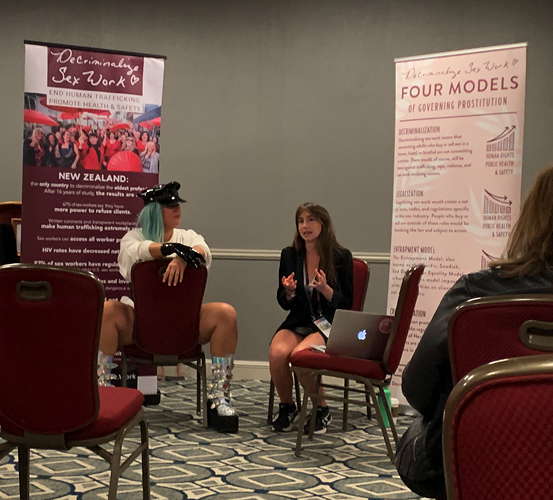
“It is the best for the health and safety of sex workers and victims and survivors of human trafficking,” Broudo, who works with the national advocacy group Decriminalize Sex Work, said before House Judiciary.
In her view, decriminalization will lead to safer and healthier outcomes. Opposition, she said, is often “very fear and morality based.”
Not all advocates support the legislation
Robin Levasseur, of Johnston, works to assist sex workers and sex trafficking victims and opposes the legislation. She instead backs a bill that would require people convicted of soliciting prostitution to pay a $1,000 fine and participate in an education program about the perils of trafficking. The majority of the fine would be dedicated to aiding victims.
“Buyers must be held accountable to prevent the most harmful industry you can possibly imagine,” said Levasseur, who told state lawmakers that she is a survivor of commercial sex trafficking in Providence decades earlier, just a few blocks from the State House.
She lamented the period during which indoor prostitution was legal, making Rhode Island a “hub for sex tourism.”
All the legislation has been held for further study.
This story has been updated to correct an inaccuracy.