A Washington bill intended to make purchasing sex a felony and rename prostitution to “commercial sexual exploitation” was defeated this month due to testimony and organizing efforts by Washington-based advocates.
Washington House Bill 2526 was sponsored by Chris Stearns, Lauren Davis, Mari Leavitt, and Lisa Parshley – all Democratic State Representatives. The original bill upgraded the act of patronizing a person for prostitution from a misdemeanor to a Class C felony and renamed the crime of "patronizing a prostitute” to “commercial sexual exploitation.” Additionally, fines for those convicted of patronizing a person for prostitution were increased from $1,000-$5,000 to $3,000-$10,000 depending on prior convictions.
Unambiguous data shows a clear correlation between laws that criminalize clients and an increase in violence, sexually transmitted infections (STIs), and exploitation within the sex trade. Strippers Are Workers, a local dancer-led advocacy group responsible for passing 2024’s Stripper Bill of Rights in Washington, stated that HB2526 “reduces workers’ income and bargaining power … forcing them to do more for less money under more dangerous conditions.” The group warned that criminalizing buyers would increase reliance on exploitative third parties and push the sex trade further underground, making it harder for outreach workers to offer support.
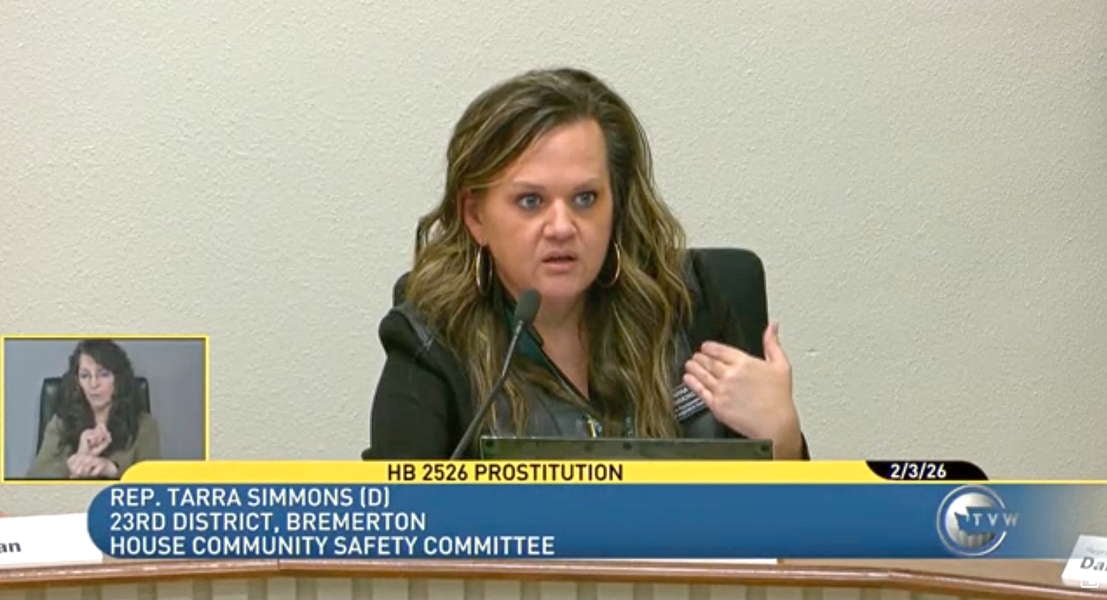
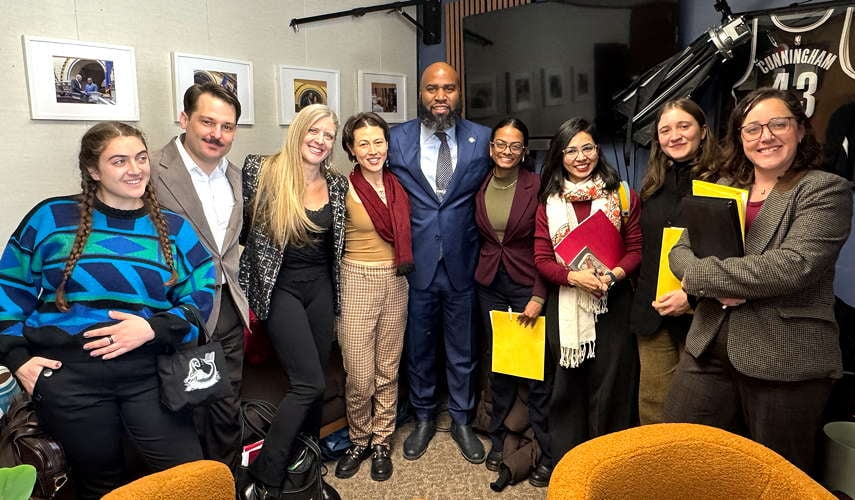
HB2536 had a public hearing in the House Committee on Community Safety on January 20. Due to organizing efforts by Strippers Are Workers and other local sex worker-led advocacy groups, multiple people showed up in person to testify against the bill. Testimony from local advocates reflected a wide range of lived experiences, including individuals who had been trafficked as children or adults and later chose sex work voluntarily, as well as sex workers who testified that they had never experienced exploitation.
One advocate testifying against the bill said, “Criminalization does not address the underlying conditions that make people vulnerable to exploitation, nor does it interrupt the exploitation when these conditions remain unchanged.” Another advocate argued that “HB2536 would classify me, an autonomous adult, as a victim of exploitation."
In general, testimony against the bill emphasized that this legislation does nothing to address the root causes of exploitation, nor does it offer basic resources like housing, healthcare, or food access, all of which are proven to reduce vulnerability to exploitation. Sex workers and survivors of trafficking need rights, services, and the ability to report harm without fear of criminalization, not legislation that forces workers to lose income or operate under increased risk.
After compelling testimony from advocates and a contentious hearing in the House Committee on Community Safety, the bill was amended. The crime of “patronizing a prostitute” — which in the original bill had been renamed to “commercial sexual exploitation” — was changed to the more neutral terminology “patronizing a person for prostitution.” Additionally, the penalty for a first offense was increased from a misdemeanor to a gross misdemeanor, but downgraded from the bill’s original felony proposal. A third conviction, however, would result in a Class C felony.
The increased fine structure of $3,000-$10,000, depending on prior convictions, was retained in the amended version. The amended bill also includes a provision referring a person charged with prostitution to services instead of a criminal record for their first and second violations. Additionally, it creates a new crime of assaulting a person engaged in prostitution, classified as a Class C felony.
The amended version passed out of a House committee on a 5-4 vote but is expected to face an uphill battle in the House and Senate in its current iteration.